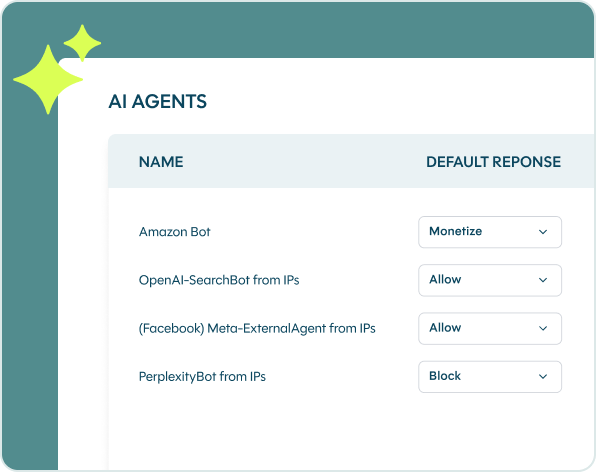
What is Meta-ExternalAgent?

The Meta-ExternalAgent crawler bot is a web crawling tool developed by Meta Platforms, Inc., primarily used for indexing and retrieving data from external websites to enhance services like Facebook’s link preview. It operates by visiting URLs shared on its platforms to gather content snippets, images, and metadata for display in user feeds.


Use cases for this crawler include enhancing user experience by providing previews of shared links, improving content relevancy, and aiding in ad targeting by analyzing the types of content being shared. However, it can be misused in fraudulent scenarios such as data scraping for competitive intelligence, unauthorized content replication, and bypassing website access controls to extract sensitive information. Such activities can lead to privacy violations and intellectual property theft, posing significant challenges for cybersecurity professionals.

Why is Meta-ExternalAgent crawling my site?

Meta-ExternalAgent is typically used by Facebook (Meta Platforms Inc.) for various purposes, including verifying the authenticity of content or for security assessments of links shared on its platforms. If you notice activity from this crawler on your website, it’s generally because your site’s content is being shared or interacted with on Facebook.


Potential negative impacts include increased server load, which could affect website performance and user experience. Additionally, if the crawler is not properly managed or mistakenly configured, it might index pages that you prefer to keep private. This could lead to unwanted exposure of sensitive information. Always ensure your robots.txt is configured correctly to manage crawler access.

Threat research insights on Meta-ExternalAgent

All data in this section are produced by DataDome's Galileo Threat Research team from our proprietary detection network and reviewed by human analysts.

Verified Bot A verified bot has high identification strength
Verified
Robots.txt Compliance Whether this bot respects robots.txt directives
Not respected
Identification Strength How confidently DataDome can identify this bot
High

Traffic origins

Top 15 countries by bot traffic

US US 99.7%
SE SE 0.27%
IE IE 0.02%

Most used autonomous system (AS)

Top 5 by traffic share

Facebook, Inc.
100.0%
Traffic Occupancy
23.56%

On average, occupy 23.56% of the traffic from bots in the directory

Authorization Rate
100%

Businesses decide to authorize this bot 100% of the time

How to block Meta-ExternalAgent?

To effectively block the bot Meta-ExternalAgent from accessing a website, you can implement several technical strategies that leverage server configuration, access control, and advanced filtering techniques. Here are five effective methods:


1. User-Agent Blocking in Server Configuration:
Most web servers like Apache or Nginx allow you to block requests based on the User-Agent string. Since bots often have unique User-Agent strings, you can update your server configuration to deny access to any request that identifies as Meta-ExternalAgent. For Apache, you can add the following to your .htaccess file:


RewriteEngine On
RewriteCond %{HTTP_USER_AGENT} Meta-ExternalAgent [NC]
RewriteRule .* - [F,L]

For Nginx, you can add to your server block:


if ($http_user_agent ~* "Meta-ExternalAgent") {
return 403;
}


2. IP Address Blocking:
If the bot consistently comes from specific IP ranges, you can block these IPs directly in your server’s firewall rules or through the web server configuration. This method requires regular updates as bot operators might change their IP addresses.


3. Rate Limiting:
Implement rate limiting to restrict the number of requests a user can make to your server within a certain period. This can be effective against bots that make high-volume requests. Most web servers have modules or configurations that support rate limiting.


4. CAPTCHA Challenges:
Deploying CAPTCHA challenges can help differentiate between human users and automated bots. Implementing a CAPTCHA on login pages, comment sections, or during account creation phases can significantly reduce bot activity.


5. Behavioral Analysis and Anomaly Detection:
Use server-side analytics to detect unusual access patterns or behaviors that deviate from normal user interactions. This can include rapid page requests, simultaneous sessions from different locations, or patterns that match known bot behavior signatures. Implementing scripts or server rules that trigger on these anomalies can block or challenge suspicious activities.


Each of these methods has its strengths and limitations, and often a layered approach combining several strategies will provide the most robust defense against unwanted bot traffic.

DataDome

See which bots and AI agents bypass your defenses

Create your account to start analyzing and mitigating malicious bots and AI-drive threats in real-time