


Agentic Commerce Readiness: 10 Key Questions to Ask Your Team
AI agents are rapidly redefining online shopping. Autonomous agents now browse product pages, compare prices, read reviews, and even complete transactions—often without the human end-user ever interacting directly with your site.
This emerging category of activity, known as agentic commerce, creates new opportunities for revenue and reach. At the same time, it introduces new and unfamiliar risks: loss of visibility, broken attribution, and new types of fraud. Most organizations don’t yet have the visibility or frameworks needed to manage this traffic safely and strategically.
10 key questions to ask your team about agentic commerce
To start navigating this transition, here are 10 questions to ask across security, marketing, product, legal, and executive leadership to assess your current state and spot gaps in your readiness.
1. What AI agents are accessing our site?
You can’t protect what you can’t see. Start by making sure you understand which specific agents are already interacting with your infrastructure. That means being able to identify them by name, see which pages, APIs, or endpoints they hit most often, and distinguish between legitimate, commercial agents and unknown or suspicious ones.
The goal is agent-aware telemetry that turns raw traffic into actionable insights about behavior and business impact.
2. Why are they accessing our website?
AI traffic is multi-purpose. Understanding intent is essential for determining whether the interaction is valuable or a security risk.
Some agents are fetching content for indexing or model improvement (like GPTBot or ClaudeBot). Others act on behalf of real users—retrieving product data, comparing prices, or completing tasks. Then there are unknown or disguised agents that may be scraping pricing, replicating your product catalog, or probing for weaknesses in your business logic.
You need to understand these different motivations to decide which interactions create value and which create risk.
3. What do we want to allow AI agents to do moving forward?
As agents become intermediaries between users and businesses, you’ll need clear guardrails. Decide which actions agents should be allowed to perform—such as browsing content, searching inventory, checking order status, or creating accounts—and which should remain strictly human-only or human-in-the-loop, like changing account details or executing transactions.
You’ll also need tiered access levels for different kinds of agents, and the technical ability to enforce these policies: blocking specific agents, rate-limiting, or requiring authentication where appropriate.
4. Are we protecting user privacy and legal compliance?
AI agents complicate the privacy landscape, from GDPR and CCPA to new AI-specific regulations. You’ll need to make sure your privacy policy explicitly covers AI agent interactions, confirm that you aren’t exposing PII or account-level data to agents that shouldn’t see it, and enforce that sensitive information is only available to authenticated users.
Crucially, some agents don’t execute JavaScript or respect cookie banners. This means your client-side privacy controls may not work. You need server-side enforcement to protect user data.
5. What’s the business value of allowing AI access?
Supporting AI agents will require investment in infrastructure, governance, and monitoring. Before you commit, you should understand the upside.
Does agent traffic actually drive conversions or revenue today? Could appearing in AI-generated recommendations significantly expand your reach? Are there direct monetization opportunities through content licensing, paid API access, or partnerships with AI platforms?
And just as importantly, what’s the potential cost of staying on the sidelines while competitors become “agent-friendly” first?
6. How will AI-mediated access reshape our digital and marketing strategies?
If users increasingly rely on agents to summarize and act on information, traditional SEO and funnel models will need to evolve.
Marketing teams will want to explore how to optimize for AI-generated recommendations and whether it makes sense to create agent-specific pages or zones. Product teams may need to build agent-oriented interfaces—like MCP servers or conversational APIs. Sales will need to plan for scenarios where a customer sends an agent in their place, and think through whether and how to enable agent-to-agent transactions.
7. How fast do we need to act, and what’s at risk if we don’t?
AI agent traffic is growing quickly, and early movers will influence norms, standards, and customer expectations.
You’ll want to assess whether competitors are already engaging with this space, whether agent traffic is rising in your industry, and whether you’re seeing unexplained patterns in bot traffic, form fills, or checkout behavior. This helps you determine both the urgency and what you stand to lose—market share, data, or insight—by delaying.
8. Is our catalog machine-readable by AI agents?
Agents don’t “browse” like humans; they extract structured data. To be usable, your catalog needs to be machine-readable. That can include structured markup like JSON-LD or schema.org on product pages, APIs that expose product descriptions, prices, and availability, and consistent SKUs, taxonomy, and metadata across your catalog.
The more structured and consistent your data, the easier it is for agents to include your products in their recommendations.
9. Are our APIs fast enough for latency requirements?
Agents operate at machine speed, and latency is a competitive factor. You should understand your API response times under normal and peak load, and whether your infrastructure can cope with sudden spikes from agent traffic.
At the same time, you’ll need rate-limiting and throttling strategies that keep performance high for good actors while protecting against abuse from bad ones. Slow or unreliable APIs increase the chance that agents will simply favor faster competitors.
10. Have we aligned security, marketing, and product teams on agent strategy?
Agentic commerce is not just a security issue—it’s a cross-functional growth opportunity. When teams operate in silos, you get misalignment: security may block useful agents and undermine marketing initiatives; marketing may optimize for agent traffic in ways that increase fraud risk; product may build new APIs that security can’t adequately monitor or control. You’ll need a shared understanding of your AI agent strategy, common goals and metrics, and ideally a cross-functional working group to keep everyone aligned.
Go deeper: Download The Guide to Readying Your Business for Agentic Commerce
These ten questions can help you kick off the right conversations across your teams. In The Guide to Readying Your Business for Agentic Commerce, we go much deeper into:
- How to build agent-aware visibility and telemetry
- Frameworks for deciding what to allow, block, or monetize
- Practical steps to align security, marketing, product, and legal
- Real-world patterns to safely capture the upside of agentic commerce
If you’re responsible for digital strategy, security, or growth, now is the moment to prepare. Download the full guide today to benchmark your readiness, uncover hidden gaps, and turn AI agents from a risk into a competitive advantage.

Related posts

Meta’s Muse Is Bringing Agentic Browsing to the Masses. Here’s Why That Matters
Tell me more
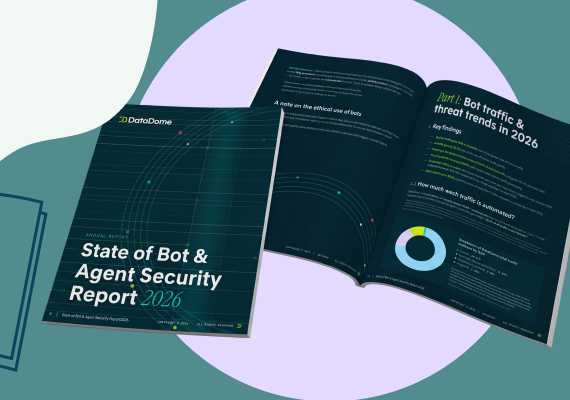
Bad Bot Traffic Is Growing 9x Faster Than Human Traffic: Takeaways From The 2026 State of Bot & Agent Security Report
Tell me more

Web Bot Auth & Know Your Agent: Why Identity Isn't Enough
Tell me more

DataDome Recognized as a Sample Vendor in the Gartner® Hype Cycle™ for Application Security, 2026
Tell me more

