
How to Avoid Fake Reviews
Fake Reviews Are a Growing Problem
Fake reviews—reviews that are fake or manipulated to either positively or negatively influence the perception of a product or service—have become an increasing problem for businesses, as they can damage the trust between customers and companies. They can be written by competitors, fake users and even automated bots.
How Fake Reviews Negatively Impact Businesses
Fake reviews can have far-reaching negative impacts on businesses. Many consumers rely heavily on online reviews when making purchasing decisions, meaning fake ones can cause them to make bad choices. In addition, fake reviews can lead to inaccurate ratings for products or services, distorting a customer’s view of the business and causing dissatisfaction with their purchase. Moreover, fake reviews may also prevent genuine reviewers from receiving recognition for their honest feedback and leave them feeling discouraged.
Fake reviews can be very damaging to the trust that consumers have in a brand. Customers may become wary of the authenticity of reviews and question the veracity of information being presented to them. By hosting fake reviews, businesses can mislead customers into thinking products are more popular than they actually are or worse—make false assertions about its capabilities. On top of that, verifying reviews one by one can be time-consuming and expensive if done manually.
How do fraudsters benefit from fake reviews?
On the other hand, fake reviews can also benefit fraudsters and malicious actors who can use them to manipulate ratings or create fake companies that appear legitimate. Fake reviews may be used to promote products in an unethical way without getting penalized by search engines, which can increase their sales and generate more profits.
Fraudsters use fake reviews to give credibility to their own product, as well as lure customers into giving out personal information on phishing websites or buying fake products. This type of deception is harmful for any business because it leads to reputation damage, financial losses, compliance issues and ultimately loss in consumer trust.
How to Detect Fake Reviews
Fortunately, there are several ways businesses can detect fake reviews and prevent them from damaging their reputation. By using automated tools such as sentiment analysis software, or by using manual verification, it is possible to quickly detect any discrepancies between positive and negative reviews. Companies should also monitor user activity on their platforms to identify fake reviewers and take actions against them. Additionally, businesses should engage with customers directly after each purchase, as this allows staff members to personally verify the customer’s opinion.
Checking a user’s profile can help detect fake reviews. Often, fake reviewers have minimal information on their profiles, or the same picture and profile description across multiple accounts.
A lack of specifics in a review is also a warning sign for fake reviews. If the reviewer does not mention any details about the product or service they purchased, then it could be an indication of fraudulence.
Repeated brand mentions are also a warning sign for fake reviews; fake reviewers may include too many unnecessary references to increase their visibility to search engines.
The language used in customer reviews can help determine if it is authentic or fake. Poorly written reviews with spelling mistakes and grammatical errors may indicate that it is fraudulent.
Allowing customers to flag fake reviews is an effective way to stop fake reviews. It allows the company to monitor their customer reviews and take action when necessary. This helps reduce the presence of fake reviews and build trust with customers.
Tools & Solutions to Prevent Fake Reviews
Fake reviews can be detrimental to a business and its reputation, so it is important to prevent them. The first step in preventing fake reviews is to identify suspicious accounts. Once these accounts are identified, you can check for multi-accounting (opening more than one account per person) to prevent further fake reviews from being posted.
You can also analyze user behavior when reviewing potential fake reviews. This includes taking into account factors such as the frequency of posts, language used, and content features (like photos). If there are inconsistent patterns or discrepancies between different aspects of their profile or activity, then it could indicate that they may be creating fake accounts in order to post false reviews.
The best solution is a comprehensive tool that can detect suspicious activity, prevent accounts from being created with false information, and monitor user behavior in order to flag any potential fake review issues. This system should also include an alert process that notifies the business of any suspicious activity, so that they take prompt action against it. By taking preventative measures and implementing an effective system for detecting fake reviews, businesses can protect their reputation and prevent future incidents.
Are fake reviews illegal?
It is also important to note that fake reviews are illegal in some countries due to their negative impact on businesses. Therefore, companies should be aware of the laws in their country and take action against anyone found creating fake reviews.
How to easily spot fake reviews?
Spotting fake reviews can sometimes be difficult, but there are a few tell-tale signs such as unusually high or low ratings, generic language used in the review, too many reviews posted within a short period of time, or repetitive phrases being used over and over again. By looking out for these warning signs and taking steps to detect fake reviews, businesses can protect themselves from this growing problem.
Use DataDome to Reduce Fake Reviews
Fake reviews can have a damaging effect on businesses and their customers. Companies should take steps to detect fake reviews and prevent them from negatively impacting their reputation. By engaging with customers directly, using automated tools such as sentiment analysis software, and monitoring user activity, businesses can protect themselves from fake reviews. Additionally, companies should be aware of the laws in their country regarding fake reviews to ensure they remain compliant. Recognizing fake reviews quickly is the key to protecting your business from this growing problem.
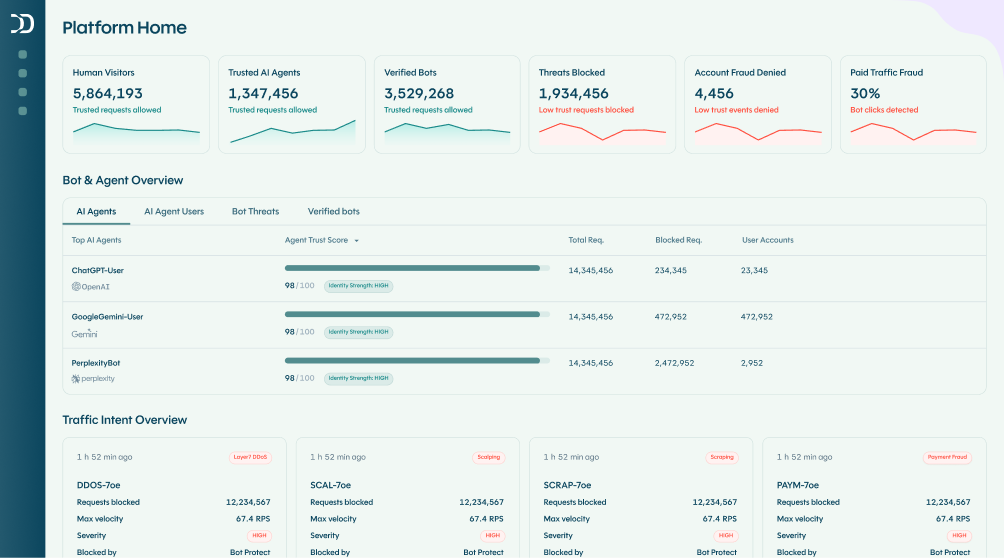
DataDome Account Protect can root out the suspicious behaviors behind fake reviews to stop them at their source—whether it’s a bot being programmed to post a false review or a human user doing it themselves. Our powerful detection engine looks at a series of signals related to user behavior to determine if the intent behind each request is malicious or not, ensuring your customers only see the reviews of other verifiably human users. See how DataDome can detect and prevent fake reviews on your site with a free 30-day trial or book a demo today.